Poop
By Nick Schoeps
August 20, 2026
I led with feces. I don’t think anyone saw that coming.
When the NSF asked us to come pitch on the Cornell campus in NYC, this can’t be what they envisioned. It was my first solo pitch, and I was the last on stage for the day . . . I needed something to wake up the crowd.
Poop would do nicely.
If you’d asked me five years ago when we started this adventure that I’d be waking up in the morning excited about pumping poop, well . . . it doesn’t have the same allure as “Motorcycle Race Engineer on the Isle of Man” or “Bultaco e-moto dirt bike lead in Barcelona” or some of the other titles I’ve carried. But opportunity is exciting, and dirty jobs pay well.
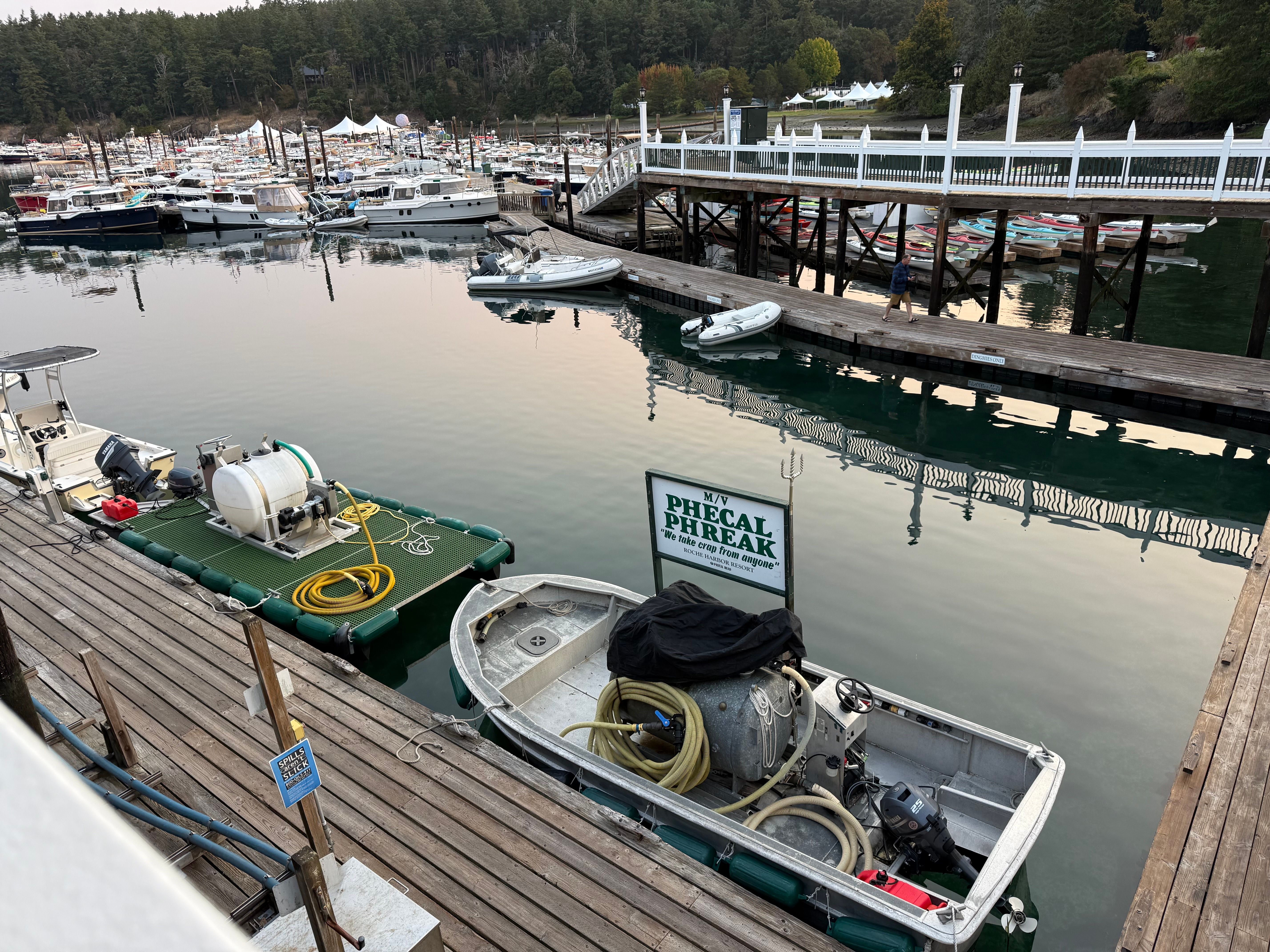
“Fecal Freak” was my leading slide, it’s Roche harbor’s plucky aging pump out boat. “Pump out” boats (for those of you who are not yacht owners) are the septic trucks of the water. They’ll motor over to your slip in the harbor and empty your holding tanks of all the excrement you’ve accumulated. It’s big business, and it’s also such a great application for electric propulsion that I can’t stop thinking about it!
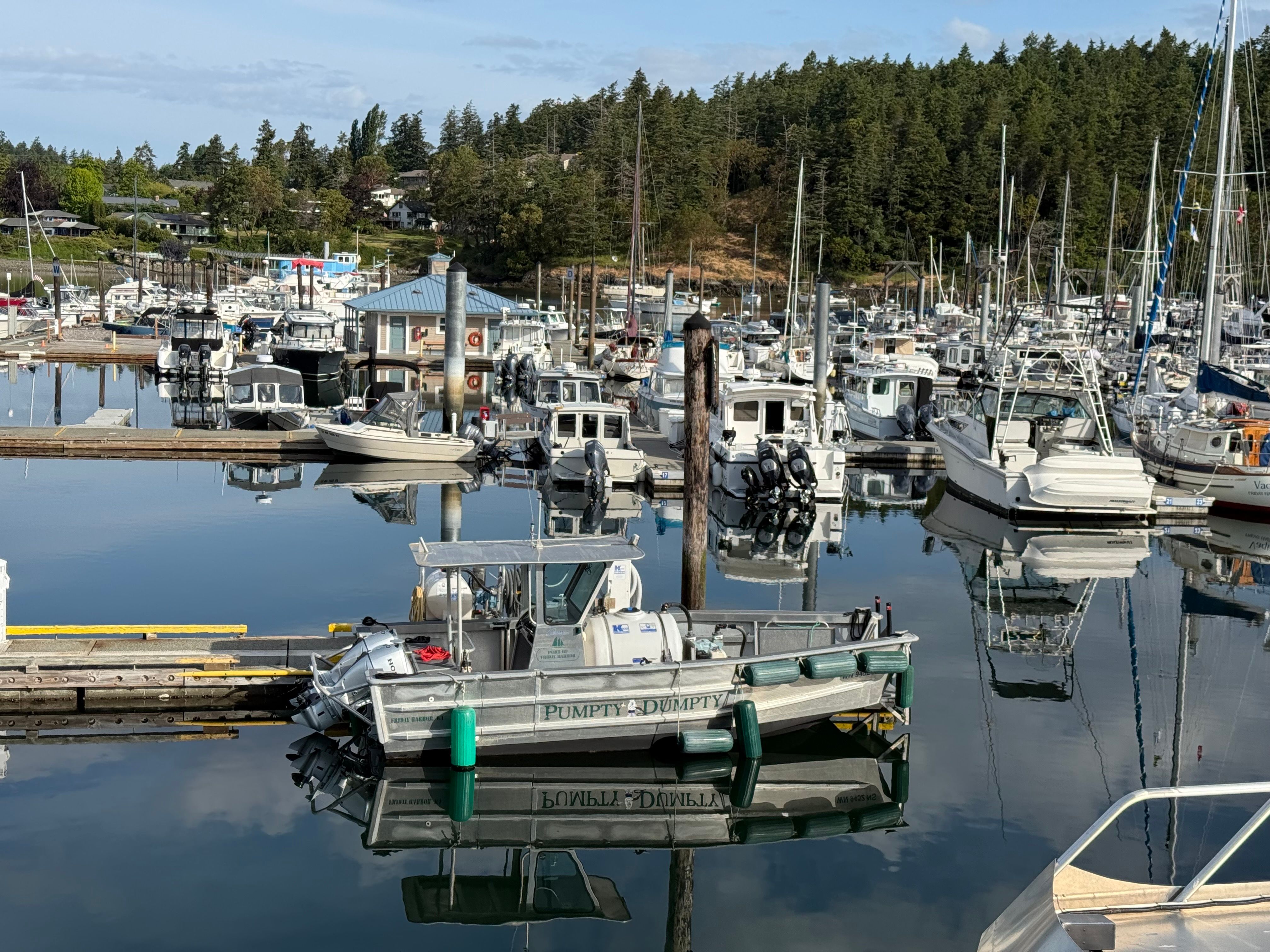
Why ⚡️ + 💩 = 🏆?
- First, 325 gallons of pungent ballast takes some muscle to move. Thus, electric, low-speed torque and propulsive power is a perfect fit.
- Second, poop pumping is slow work. Rarely do they exceed four knots in the harbor, so batteries last them for days at a time between charges.
- They’re a high-usage tool that is constantly working - that means ROI happens fast.
- Slow work and constant FWD→REV changes are brutal on gas motors; it’s where they’re least efficient and most pollutive. Maintenance savings are profound here.
- Of all the boats we deploy, pump-outs spend the most time in and around the harbor - the very area where you want reduced emissions and noise, and cleaner air.
Quick 💰 Math
During a busy weekend, these boats are running 10 hour shifts burning 1-2 gallons per hour at slower speeds. If we were to estimate a 6 hour average day 300 days per year at 1.5 gallons per hour or roughly $45 per day in fuel compared to $1.75 for electricity. That’s about $13K in fuel savings per year.
You’d also need to budget 30min to fuel twice weekly, figure $10 burdened time for an employee per day or $70 per week, $3k+ per year just refueling.
Then the maintenance and down-time. These boats operate roughly 1800 hours per year. A Photon electric motor would only require two lower-unit gear oil changes, a cost of no more than $600 total for twin motors. A comparable gas outboard motor will require timing belts, oil changes, water pumps, and a full rebuild at the end of the season. Likely at least $10K per motor, or $20K annual.
At least $35,000 operational savings per year, not counting the opportunity cost of down-time when the boat is in the shop, and the externalities of staff safety operating a nearly silent vessel.
So many reasons why EVERY pump-out boat should be electric, and YES we have built one!
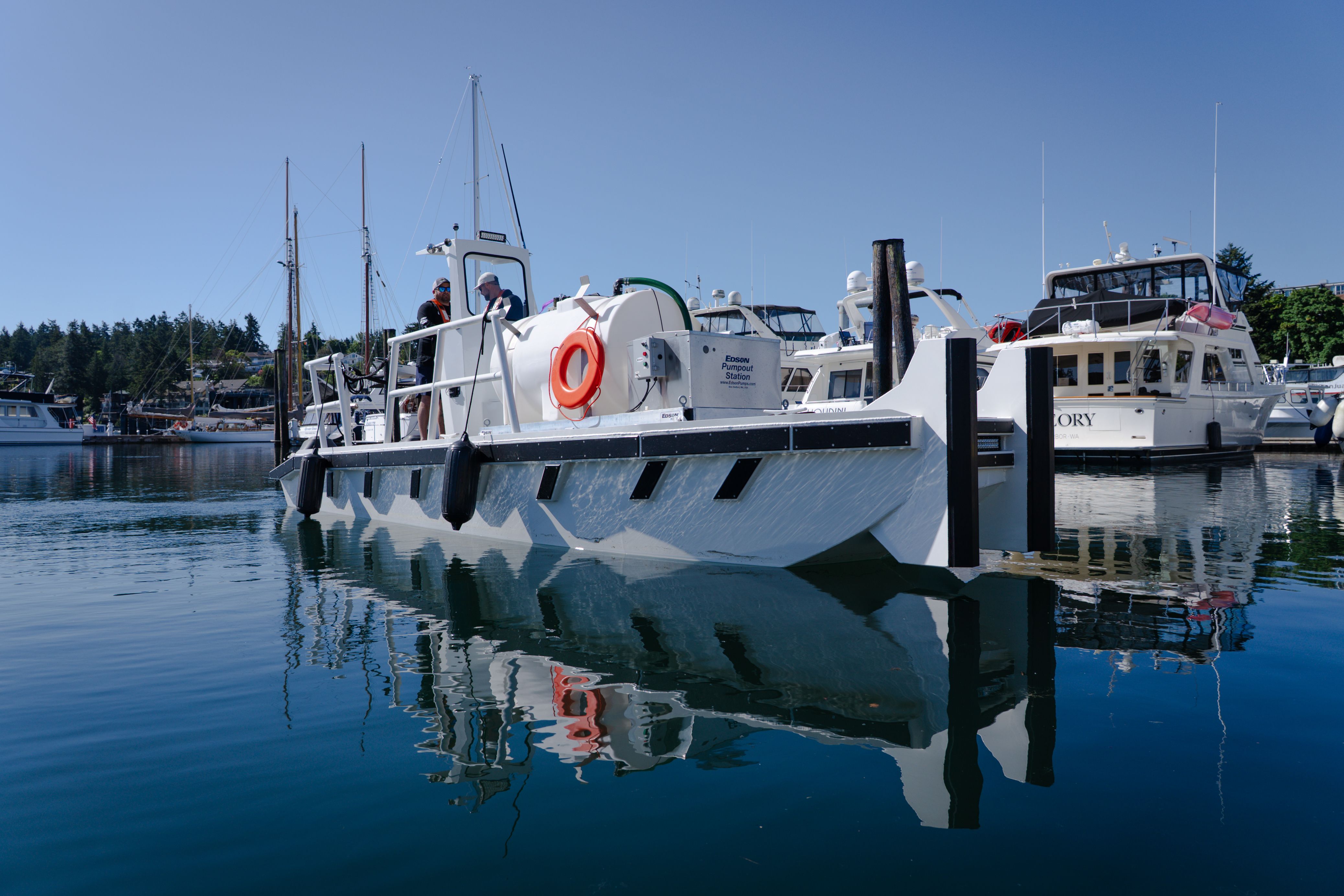
Pooseiden is the newest addition to the fleet of the Port of Friday Harbor in the San Juan Islands of Washington state. I daresay she’s the most technologically advanced dung distributor that has been launched and a darn-fine looker at that.
Of the four boats on order from the Port, Poosiden will likely be the most overlooked, but to me she’s the queen of the parade and the MVP of the operations. Even if you’ve read this far I doubt you’re as excited about crap conveyance as I am, but I bet I made just a little more of a believer out of you that electric and excrement have a not-so-shiny future ahead.
Here’s our TCO Calculator if you want to crunch the numbers yourself and learn that it might be time for a new pump out vessel yourself!